+62 811-1300-9840


Dental Scaling: Maintaining Dental Cleanliness and Health to Prevent Damage
13 March 2026
4 min read


By: Prof. Dr. drg. Anggraini Margono, Sp.KG(K)
Have you ever felt that the surface of your teeth is rough when touched by your tongue or experienced persistent bad breath even though you brush your teeth regularly? This condition is often a sign of tartar buildup that requires dental scaling treatment. Dental scaling is one of the basic treatments in maintaining dental and gum health. Unfortunately, this procedure is still often overlooked because it is considered unimportant or merely cosmetic. In fact, its benefits go far beyond making teeth look clean.
What Causes Teeth to Feel Rough and Bad Breath?
Teeth that feel rough are generally caused by plaque buildup that hardens into tartar. Plaque is formed from food debris and bacteria that stick to the surface of the teeth. If not cleaned properly, plaque will harden and cannot be removed by regular brushing alone. Tartar also becomes a breeding ground for bacteria that cause bad breath and gum inflammation. This is why bad breath can still occur even if you brush regularly.
Teeth that feel rough when touched by the tongue are usually caused by plaque buildup that has hardened into tartar. Plaque is formed from food debris, bacteria, and saliva that accumulate on the tooth surface every day. If not cleaned optimally through brushing and flossing, plaque will harden over time and turn into tartar (calculus). Unlike soft plaque, tartar cannot be removed by regular brushing and requires scaling by a dentist.
In addition to making the tooth surface feel rough, tartar is also a breeding place for bacteria. These bacteria produce sulfur compounds that cause bad breath (halitosis). This is why bad breath can still occur even if someone brushes their teeth regularly.
What Is Dental Scaling?
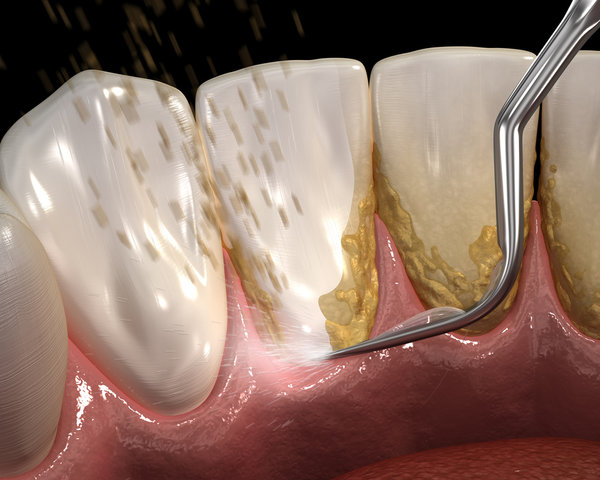
Dental scaling is a procedure performed by a dentist to clean tartar using special instruments. This procedure aims to remove tartar that sticks to the tooth surface as well as below the gumline. Dental scaling not only helps clean the teeth but also plays an important role in maintaining gum health and preventing more serious dental problems.
Dental scaling is performed using an ultrasonic scaler that works with vibrations to break down and remove tartar from the tooth surface. After that, the teeth are cleaned and polished so the surface becomes smoother, preventing plaque from easily building up again.
Benefits of Dental Scaling
- Removes tartar that cannot be cleaned by brushing alone
- Reduces bad breath
- Helps prevent gum inflammation
- Maintains healthy gum tissue
- Makes teeth feel cleaner and smoother
Is Dental Scaling Safe?
Dental scaling is a safe procedure when performed by a dentist. Some people may feel slight discomfort or temporary sensitivity afterward, but this is usually temporary. Scaling does not damage or erode the teeth. Instead, it helps maintain dental and gum health.
Teeth that feel rough and persistent bad breath are often signs of tartar buildup that cannot be resolved by regular brushing alone. This condition should not be ignored because it may develop into gum problems and more serious dental damage. Dental scaling is an essential step to thoroughly clean tartar, maintain gum health, and prevent future oral health issues.
With proper dental care, daily oral hygiene, and routine dental checkups, oral and dental health can be well maintained. As a result, daily activities feel more comfortable, and self-confidence remains high.
FAQ
Does dental scaling hurt?
Some people may feel slight discomfort during scaling, especially if there is a lot of tartar. However, the procedure is generally painless and safe.
Can dental scaling damage the teeth?
No. Dental scaling does not damage or thin the teeth. Instead, it removes tartar that can damage the gums and supporting tissues if left untreated.
Does scaling cause tooth sensitivity?
Some people may experience temporary sensitivity after scaling. This condition is typically mild and improves within a few days.
Contact us
For information and make an appointment

| Loading data... |
|---|