+62 811-1300-9840


Recognize Stroke Symptoms with BE-FAST, Don't Miss the Important Golden Period!
12 December 2025
4 min read


Stroke is one of the leading causes of death and disability in Indonesia.
The good news is that in most patients, brain damage can be minimized if stroke is recognized early and treated within the "golden period," which is <4.5 hours after symptoms appear.
Unfortunately, many patients and their families still think, "Wait a minute, who knows, it might just be soreness or fatigue." As a result, patients arrive at the emergency room late, even though their brains can't wait.
This article will help you understand:
- What is a Stroke? Recognizing BE-FAST Symptoms and the Importance of Treatment During the Golden Period.
- Symptoms to Watch Out For (BE-FAST),
- Examination Steps at Premier Jatinegara Hospital's Emergency Room,
- and Why Every Minute Counts for the Brain.
What Is a Stroke: Recognizing the Symptoms BE-FAST and the Importance of Treatment During the Golden Period?
A stroke occurs when blood flow to the brain is interrupted, depriving brain cells of oxygen and causing them to die.
Broadly speaking, strokes are divided into:
- Ischemic stroke: A blood vessel in the brain is blocked.
- Hemorrhagic stroke: A blood vessel in the brain ruptures, causing bleeding.
Both are medical emergencies. The longer they are left untreated, the more brain cells are damaged and the greater the risk of permanent disability or death.
BE-FAST Concept
To make it easier for the public to recognize a stroke, the acronym BE-FAST is used.
B - Balance
Balance disturbance
Are there any sudden dizziness or unsteadiness?
E - Eye
Visual field disturbance
Are there any sudden visual disturbances or double vision?
F - Face
Ask the person to smile.
Does one side of the face appear droopy or crooked?
A - Arm
Ask the person to raise both arms.
Does one arm droop or become unable to lift?
S - Speech
Ask the person to speak a simple sentence.
Is their speech slurred, slurred, or difficult to understand?
T - Time
If any of the above signs are present: THIS IS AN EMERGENCY.
Go to the emergency room immediately and note the time the symptoms began.
What is the “Golden Period”?
The "golden period" of stroke is the time during which certain therapies (e.g., selective clot-busting drugs for ischemic strokes/thrombolysis) can still be administered and are expected to yield the best results.
This time span is within <4.5 hours of symptom onset. Therefore, every minute delayed in reaching the emergency room means more brain tissue damage.
Common Symptoms and Complaints:
- Sudden weakness in the face, arm, or leg on one side of the body.
- Sudden visual disturbances: blurred, double, or partial loss of vision.
- Severe dizziness, difficulty walking, unsteadiness, or sudden drunkenness.
- Sudden, severe headache, especially if you're not used to having headaches.
- Speech disturbances: difficulty speaking, slurred speech, or difficulty understanding others.
- Decreased level of consciousness: severe drowsiness, unresponsiveness, or even fainting.
In some patients, symptoms may be less typical: such as simply feeling very weak, confused, or “strange” on one side of the body.
Risk Factors: Who is at Higher Risk of Stroke?
Several factors that make someone more susceptible to stroke:
- Hypertension (high blood pressure)
- Diabetes mellitus
- High cholesterol
- Smoking
- Obesity and lack of physical activity
- Heart disease (arrhythmias, valve abnormalities, coronary heart disease)
- History of stroke or TIA (Transient Ischemic Attack)
- Family history of stroke
However, strokes can also occur in people who feel "fine." Therefore, recognizing the symptoms BE-FAST and going to the emergency room immediately is far more important than trying to guess the cause at home.
Examination and Diagnosis at the Emergency Room of Premier Jatinegara Hospital
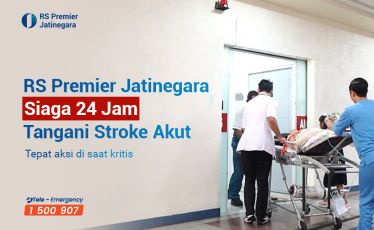
As soon as a patient with suspected stroke arrives at the Emergency Department at Premier Jatinegara Hospital, the Emergency & Acute Care team will act quickly:
1. Initial assessment (stroke triage)
- Check vital signs (blood pressure, pulse, respiration, saturation).
- A brief interview about the time of symptom onset (time is brain).
- An initial neurological examination to assess severity.
2. Pemeriksaan penunjang penting
- Brain CT scan/MRI: Performed as early as possible to distinguish whether the stroke is ischemic or hemorrhagic.
- Blood tests: Blood sugar, kidney function, blood clotting, and other necessary parameters.
- ECG (Electrocardiogram): To check for any heart rhythm disturbances that could be causing the stroke.
When Should You Go to the Doctor or Emergency Room Immediately?
For stroke, the answer is simple: Go to the emergency room immediately if you experience even one of the following BE-FAST symptoms: facial dislocation, weakness in one arm or hand, slurred speech, balance problems, vision problems, or other sudden and suspicious symptoms.
Don't wait:
- "Let's see until tomorrow."
- Take over-the-counter medication first.
- Or get a massage.
The golden period doesn't wait. Every minute of delay can reduce the chance of optimal therapy.
Cotact Us
For Information and Appointment


| Loading data... |
|---|